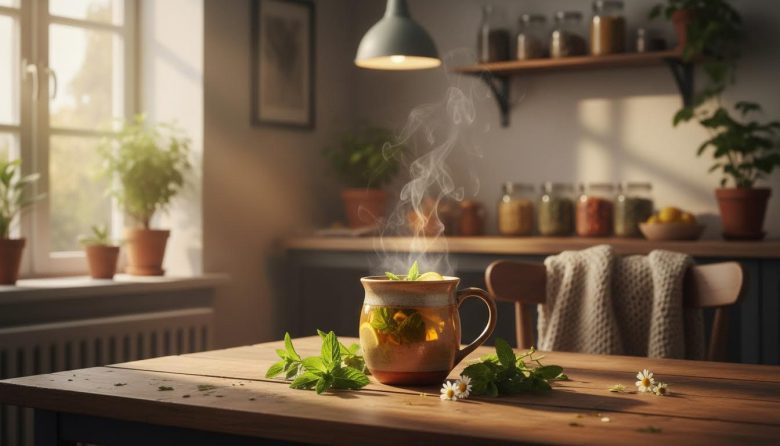
After a long day juggling work calls and family errands, I remember one evening last fall when I felt my shoulders tense up like knotted ropes. I decided to brew a simple cup of chamomile tea instead of reaching for my usual screen scroll. That warm mug in my hands shifted something—my breathing slowed, and the day’s buzz faded into a quieter space.
The appeal of these home herbal drinks lies in their simplicity and the way they tap into our body’s natural responses. Warmth from the liquid can signal safety to the nervous system, much like a comforting hug, while hydration supports steady energy. Herbs add layers that may gently influence stress pathways, making evenings feel more settled without much effort.
In the sections ahead, I’ll share why these drinks often help, five pantry herbs I’ve stocked, a easy setup for your routine, four recipes I’ve tested, ways to pair them with light movement, and safety notes. You’ll also find a quick-reference table and tracking tips. Try one this week, note your mood or sleep shifts, and see what sticks for your days.
Why Warm Herbal Drinks Often Ease the Evening Wind-Down
Warm herbal drinks can help calm the body by engaging the parasympathetic nervous system, which promotes rest over fight-or-flight. Sipping slowly creates a ritual that cues the brain it’s time to unwind, often syncing with circadian rhythms for better sleep onset. Compounds in herbs like chamomile may interact with GABA receptors, fostering mild relaxation similar to how some medications work but gentler.
In my own routine, I swapped afternoon coffee for herbal tea around 3 p.m. one month. I noticed quicker sleep starts—down from 45 minutes to about 20—without grogginess. This isn’t universal, but the consistent warmth and aroma played a role in dialing down my evening cortisol hum.
Heat from the drink also aids digestion, reducing post-dinner discomfort that can keep minds racing. Overall, these elements combine for a low-key way to ease into rest, especially when paired with dim lights.
Stocking Five Everyday Herbs That Tend to Promote Calm
Chamomile tops my list—its mild apple-like flavor comes from apigenin, which may bind to brain receptors for calm. I buy loose-leaf from the grocery bulk aisle; it stays fresh longer than bags. Store in airtight jars away from light to preserve potency.
Lavender offers a floral note that can lower heart rate variability in studies on aroma. Lemon balm, with its citrusy edge, tends to reduce cortisol during stress tests. Both are easy finds online or at tea shops; I keep small weekly batches prepped.
Peppermint cools mentally while soothing the gut, thanks to menthol relaxing smooth muscles. Passionflower, slightly tart, may boost GABA levels for evening ease. My pantry staples rotate these five—a handful keeps costs under $20 monthly. For more on basics, my Simple Daily Plan for Light Healthy Eating weaves them into snacks seamlessly.
Setting Up a Simple Home Drink Station for Consistency
A dedicated spot builds habits through visual cues. I cleared a kitchen counter corner: electric kettle, metal infuser, two favorite mugs, and herb jars labeled by day. Plug in the kettle nightly at 7 p.m.—it beeps as your unwind prompt.
Prep weekly by portioning herbs into glass jars; this cuts decision fatigue. Add a timer for steeping to keep it foolproof. My station near the couch ties into reading time, making calm predictable.
For flow, place it by your evening chair. This setup, tested over months, turned sporadic sips into a non-negotiable routine. It pairs well with ideas from How to Plan Days with More Calm Breaks, extending that pause.
Four Tested Recipes for Quick Calming Sips
Start with Basic Chamomile: Boil 8 oz water, steep 1 tsp loose chamomile 5 minutes, strain, sip plain or with a lemon slice. Best 30 minutes pre-bed. I add it after dinner for gut settle.
Lavender-Lemon Balm Latte: Heat 6 oz almond milk, steep ½ tsp each lavender and lemon balm 4 minutes, froth lightly, sweeten with honey if needed. Dairy-free and creamy. My tweak: a dash of cinnamon for warmth on cooler nights.
Iced Peppermint Twist: Brew strong 1 tbsp peppermint in 8 oz hot water 7 minutes, chill 10 minutes, add ice and fresh mint leaf. Great for humid evenings. I sip during desk stretches; the cool shifts focus gently.
Passionflower Nightcap: Simmer 1 tsp passionflower with 8 oz water 10 minutes, strain, add a star anise for subtle spice. Wind-down king in my tests. Rotate these to avoid tolerance; each takes under 10 minutes active time.
| Drink Name | Key Herbs | Prep Time | Best For | Quick Personal Tip |
|---|---|---|---|---|
| Basic Chamomile | Chamomile | 5 min | Pre-bed gut calm | Lemon slice boosts flavor in my mug |
| Lavender-Lemon Balm Latte | Lavender, Lemon Balm | 6 min | Creamy evening ritual | Froth for latte feel without dairy |
| Iced Peppermint Twist | Peppermint | 10 min (incl chill) | Mid-evening refresh | Mint leaf garnish wakes senses lightly |
| Passionflower Nightcap | Passionflower | 10 min | Deep wind-down | Star anise adds cozy depth |
| Mixed Herb Blend | Chamomile + Peppermint | 5 min | Flexible daily use | Half portions for first-timers |
Pairing Your Drink with Gentle Movement for Added Ease
Sip your herbal while doing 5-minute shoulder rolls or neck tilts—warmth loosens muscles as you move. This combo enhances parasympathetic activation, blending physical release with herbal calm. In my evenings, chamomile plus rolls eases desk hunch.
Try a slow walk around the living room, mug in hand; light steps aid circulation without revving heart rate. Breathing deepens naturally with each sip. I tested this post-dinner: tension drops faster than drink alone.
For seated options, pair with ankle circles or wrist flexes. These micro-movements, rooted in body awareness, amplify the ritual. Link it to mindful moments via A Beginner’s Guide to Mindful Eating Habits, slowing everything down.
Safety Notes and When to Pause Before Sipping
Most herbs here suit moderate use, but check for allergies—start with small sips. Pregnant folks should skip passionflower and high lavender; consult a doctor. Interactions with sedatives or blood thinners possible, so review meds.
Moderation means 1-2 cups nightly; rotate to prevent buildup. If drowsiness hits unusually, pause and track. These notes keep things safe and simple.
Tracking Your Sips to Find What Fits Your Days
Grab a notebook: note pre-sip mood (1-5 scale), post-sip feel after 30 minutes, and next morning’s sleep quality. Test one recipe weekly. I discovered lavender suited hectic days better after two weeks of notes.
Apps work too, but paper’s quick. Adjust based on energy or tension signals. This experimentation reveals personal patterns without guesswork.
Commit to seven days; small tweaks yield big evening shifts. Your routine emerges from there.
Frequently Asked Questions
Can these drinks help with anxiety right away?
They may offer short-term calm through the ritual of sipping and herbal compounds, but effects vary by person and day. Not a replacement for therapy or meds—think supportive pause. Track your response to see patterns.
Are herbal teas safe every night?
In moderation, yes for most, but rotate herbs to avoid over-reliance on one. Watch for interactions with medications; chat with a doc if on prescriptions. Start low and listen to your body.
What if I don’t like the taste?
Add honey, lemon, or ginger gradually to build tolerance—flavors grow on you. Blend mild with familiar, like chamomile-peppermint. Experiment; palates adapt over a week or two.
Do they affect sleep like melatonin?
Gentler wind-down support via relaxation pathways, not direct hormone mimicry. May shorten time to sleep onset for some. Personal tracking shows the best fit.
Where to buy quality herbs affordably?
Grocery bulk bins or tea aisles offer fresh at low cost; smell for vibrancy. Online bulk from reputable sellers saves more long-term. Store properly to extend shelf life.
As Liam Harper, I’ve woven these sips into my evenings for calmer nights—light, tested steps anyone can try. Build your ritual slowly, track what clicks, and enjoy the ease.