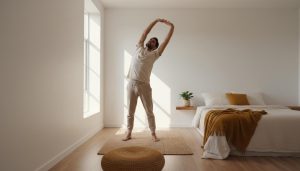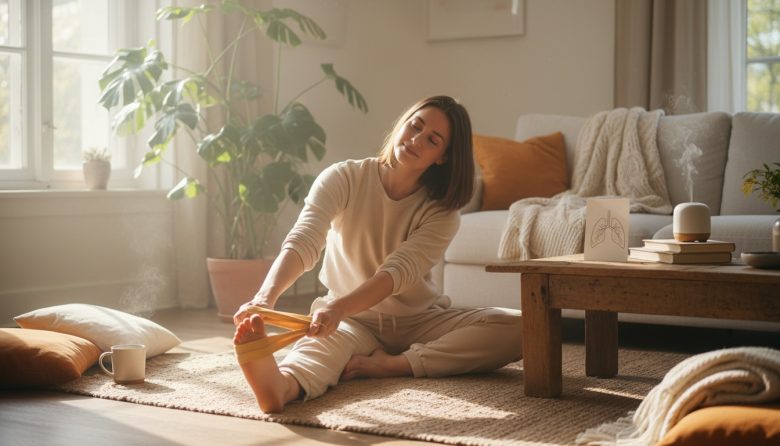
During a particularly hectic workweek last year, I found myself hunched over my desk, shoulders tight and mind racing. That’s when I turned to gentle stretches and simple breathing exercises—nothing fancy, just moves I could do between emails. They quickly became my go-to for easing that built-up tension, and I’ve refined them into a realistic routine that fits everyday life.
These practices often help calm the nervous system by signaling safety to your body. Deep breaths, for instance, can activate the vagus nerve, shifting you from stress mode to rest-and-digest. Stretches release muscle tightness linked to poor posture from desk hours. Together, they tend to improve mobility and mood without demanding gym time or expert skills.
This 30-day challenge breaks it down into a progressive plan I’ve tested myself. You’ll build awareness week by week with just 5-10 minutes daily. It’s designed for busy folks like us, focusing on doable habits that stack small wins. Grab a journal to note your energy or mood shifts—tracking makes the gains clearer.
Experiment with timings that suit your rhythm, perhaps linking to your morning routine for focus and deep relaxation. Many notice better posture and less afternoon slump after a couple weeks. Let’s dive into why this combo works so well for daily calm.
How Gentle Stretches and Breaths Tame Your Stress Response Daily
Gentle stretches lengthen muscles that clench during stress, easing the fight-or-flight response. This physical release often lowers cortisol levels over time. In my routine, a quick post-lunch stretch session cut through my afternoon mental fog reliably.
Breathing practices deepen your inhales and exhales, engaging the parasympathetic nervous system. This shift promotes relaxation by slowing heart rate and quieting racing thoughts. Studies on techniques like diaphragmatic breathing show they can help regulate the stress response effectively.
Combining them amplifies the effect—stretches open the body while breaths anchor the mind. You may feel a subtle unwind in your neck or back after just a few minutes. It’s a low-effort way to interrupt stress patterns before they build.
I’ve woven this into evenings too, pairing breaths with a warm drink. The consistency tends to improve sleep quality. Plain mechanisms like these make it accessible for anyone starting out.
Core Moves I’ve Vetted for Busy Mornings and Evenings
Start with a seated neck release: Sit tall, tilt your head to one shoulder, hold 20-30 seconds per side. Repeat twice. I do this first thing at my desk to loosen overnight tension.
Try child’s pose for the back: Kneel, fold forward with arms extended, forehead to floor or mat. Breathe deeply for 45 seconds. This one resets my spine after long sits.
Cat-cow flow on all fours: Arch and round your back with breath sync, 5-8 rounds. It mobilizes the spine gently. Perfect for mornings to wake up mobility.
For breathing, use 4-7-8: Inhale 4 counts, hold 7, exhale 8. Do 4 cycles. I tested this before bed—it often eases my mind into sleep faster.
Alternate with box breathing: Inhale 4, hold 4, exhale 4, hold 4. Four rounds suffice. These fit anywhere, like waiting for coffee. Keep them light; no forcing holds.
Your 30-Day Challenge Schedule at a Glance
This table lays out the full 30-day plan in a quick-reference format. Each week builds on the last, starting basic to foster awareness and progressing to gentle flows. Aim for consistency, but adjust as needed—total time stays under 10 minutes daily.
Mark off completions in your journal for that satisfaction hit. Themes guide focus: Week 1 on basics, Week 4 on integration. A bonus week reinforces habits. Here’s the schedule:
| Week | Theme | Daily Stretches (3 poses, hold 20-45s each) | Breathing Practice | Time Total | Weekly Reflection Prompt/Checklist |
|---|---|---|---|---|---|
| 1 (Days 1-7) | Build Awareness | Seated neck release (both sides); Child’s pose; Seated forward fold | 4-7-8 breath, 4 cycles | 5-7 min | Mood check: Energy up post-session? Y/N. Note tension spots. |
| 2 (Days 8-14) | Add Flow | Neck release; Cat-cow (5 rounds); Standing side stretch | Box breathing, 4 rounds | 7-8 min | Posture check: Easier movement? Y/N. Track sleep quality. |
| 3 (Days 15-21) | Deepen Calm | Cat-cow; Thread-the-needle twist; Legs-up-wall | 4-7-8 + belly breaths, 5 cycles | 8-10 min | Stress check: Afternoon calm better? Y/N. List 1 win. |
| 4 (Days 22-30) | Integrate Habits | Full flow: Neck, cat-cow, child’s pose + twist | Alternate box/4-7-8, 4-5 rounds | 8-10 min | Overall gains: Mobility/mood shifts? Y/N. Plan next month. |
| Bonus (Ongoing) | Maintain Ease | Choose your top 3 poses | Mix breaths as needed | 5 min | Habit check: Stuck in routine? Adjust/tweak. |
Use this as your daily roadmap—print it or screenshot for your phone. Progression prevents boredom while building strength gently. I revisited mine after Week 2 and felt noticeable shoulder freedom.
Weaving the Challenge into Real Life Without Overhaul
Anchor mornings to your wake-up: Stretch while coffee brews. This sets a calm tone without extra time. I pair it with light exposure for better focus.
Evenings work post-dinner—try after sipping a herbal tea for gentle evening unwind. It signals wind-down to your circadian rhythm. My weeknights improved with this tweak.
Desk breaks: Use chair versions of poses during calls. List of anchors: 1) Post-meal reset. 2) Pre-bed ritual. 3) Midday pause. Track sleep in your journal—quality often rises.
These slots make it stick without lifestyle flips. Experiment to find your best fits.
Spotting Gains in Mood, Mobility, and Calm
Journal simple signals: Rate energy 1-10 before/after sessions. Note tension relief in neck or hips. Many see posture perks by Week 2.
Track mood swings—breaths often steady them. My shoulders eased noticeably mid-challenge. Watch for better sleep or focus as bonuses.
Review weekly prompts from the table. Small shifts compound over 30 days.
Safety Notes: Listen to Your Body’s Signals
Move into poses slowly; back off at sharp pain or dizziness. Gentle means no forcing—shorten holds if needed. Desk sitters, use chair mods for all stretches.
If you have injuries, recent surgery, or conditions like high blood pressure, check with a doctor first. Breathing: Skip holds if lightheaded. Hydrate and breathe normally throughout.
It’s non-alarmist: Bodies vary, so tune in. Modify for comfort always.
FAQ
Can total beginners jump into this challenge?
Yes, it starts with the gentlest basics in Week 1, designed for zero experience. Modify holds or use props like a chair—comfort leads. Track how your body feels daily to build confidence gradually.
What if I miss a day—does it ruin progress?
No, flexibility is key to sustainable habits. Pick up the next day without guilt—consistency beats perfection. Many find even 4-5 days a week yields benefits; adjust to your life.
Will this help with back pain or anxiety?
It may ease tension-related back discomfort or mild anxiety through relaxation responses. Results vary; it’s supportive, not medical treatment. Consult a professional for persistent issues.
How long per session, and best times?
Sessions run 5-10 minutes total, scaling with weeks. Mornings energize, evenings unwind—test both against your energy. Pair with routines like making calming herbal drinks at home for rhythm.
Any gear needed beyond a mat?
None required; all poses adapt to chair, wall, or floor. A yoga mat adds cushion if you like, but it’s fully home-friendly. Keep barriers low for easy starts.
Ready to launch your 30 days? Start today with Week 1, journal your first notes, and watch calm build. Share your Week 2 wins below—small steps lead to real ease. Experiment freely and track what clicks for you.