Rushing through my mornings used to leave me tense and scattered, like my body was still carrying yesterday’s stress. One busy week, I tested a simple 5-minute stretch routine right by my bed, and it shifted everything—my energy felt steadier, and focus came easier. This isn’t about perfect yoga poses; it’s relaxed stretches that anyone can do to ease into the day.
Gentle morning stretches appeal to busy schedules because they take just minutes and target overnight tension without equipment. They can help quiet the morning cortisol spike, often improving mood and posture as you move. In my routine, I’ve stuck with this for months, noting calmer starts even on hectic days.
Building this habit starts with small, doable steps: pick a quiet spot, follow a simple sequence, and track how your body responds. You’ll likely notice subtle shifts in tension and energy. Try it tomorrow morning and jot down your mood before and after for a week—see what works for you.
Why Gentle Morning Stretches Quiet Your Stress Response
Light stretches in the morning signal safety to your nervous system, which may help dial down the natural cortisol rise that peaks upon waking. This gentle movement activates the parasympathetic response, often easing muscle tightness from sleep. Your body tends to release held tension, promoting better blood flow without overstimulating.
In my routine, doing these after a night of poor sleep eases that stiff feeling in my neck and shoulders. Studies on similar practices show they can lower stress markers, though results vary by person. It’s a low-effort way to support your circadian rhythm, setting a calmer tone for the day.
Unlike intense workouts, these relaxed holds focus on breath and slow motion. This approach often improves focus by reducing physical distractions early on. Give it consistency, and it may become a reliable anchor for steadier mornings.
Setting Up a Calm Corner for Your Daily Stretch Habit
Clear a small space by your bed or in the living room—no need for a full yoga studio. Roll out a towel or thin mat if the floor feels hard, but bare space works fine. Dim the lights or use natural dawn glow to keep it soothing.
My bedside spot takes 30 seconds to ready: push aside the blanket, stand barefoot, and breathe. Add a plant or open window for calm vibes. This minimal setup cuts excuses and invites repetition.
Here are four quick ideas for your corner:
- Bedside floor: Ideal for sleepy starts, no walking needed.
- Kitchen counter edge: Hold lightly while coffee brews.
- Window sill: Morning light enhances the relaxing effect.
- Bathroom mirror: Check form gently, keep it brief.
Start small to build the habit—consistency beats perfection every time.
Five Targeted Stretches to Release Overnight Tension
These stretches focus on common tight spots: neck, shoulders, back, hips, and sides. Each pairs slow movement with deep breaths to amplify release. Aim for smooth holds, no forcing—your body will loosen with practice.
Begin standing or seated, whatever feels natural. Inhale to lengthen, exhale to deepen the stretch. My go-to sequence flows without pauses, totaling five minutes for an effortless flow.
Follow this timed sequence next:
- Neck Rolls (45 seconds): Drop chin to chest, slowly roll head side to side, then back. Breathe deeply— this eases overnight clenching. Benefits: Reduces headaches, improves mobility.
- Shoulder Shrugs & Circles (45 seconds): Lift shoulders to ears, release down; circle forward and back. Pair with exhales. Benefits: Loosens upper back tension from sleep positions.
- Cat-Cow Flow (60 seconds): On hands and knees, arch back up on exhale (cat), dip down on inhale (cow). Move gently 8-10 times. Benefits: Wakes spine, calms breathing.
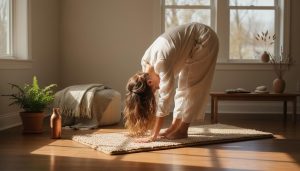
- Forward Fold (60 seconds): Stand, hinge at hips, let arms hang; bend knees if tight. Sway lightly. Benefits: Releases hamstrings and lower back strain.
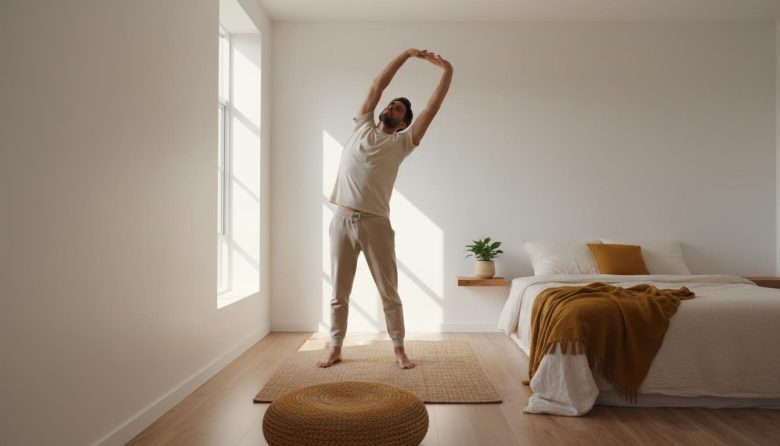
- Hip Opener & Side Stretch (90 seconds): Lunge one side (30 sec), switch; then reach arm overhead for side bend (15 sec each). Benefits: Opens hips, balances posture for the day.
This order builds from head to toes, transitioning smoothly. Adjust times if needed to fit five minutes.
Weaving Your Stretch Routine into Hectic Mornings
Anchor it to an existing cue, like right after brushing teeth or sipping water. In my routine, I pair it with hydration—drink a glass, then stretch. This stacks habits without adding time.
Four doable ways to integrate:
- Alarm + stretch: Snooze once, use the extra for sequence.
- Coffee ritual: Flow while it brews, multitask mindfully.
- Kids’ wake-up wait: Do it quietly before chaos starts.
- Outfit change: Stretch in underwear, dress after.
For longer calm, follow with How to Start Gentle Morning Walks for Calm, blending motion seamlessly. Track energy levels for 1-2 weeks using a notes app—note patterns to tweak.
Safety Notes: Moving Mindfully to Avoid Strain
Ease into poses if you’re stiff; mild warmth is normal, but stop for sharp pain. Bend knees generously in folds, especially with back issues. Start with shorter holds to gauge your body.
I’ve built this slowly after desk-heavy weeks, adding depth over time. Consult a doctor if you have injuries or conditions like recent surgery. Listen to your signals—gentle is key for sustainability.
Breathe steadily to avoid holding tension. If dizziness hits, sit and recover. This keeps the routine safe and inviting long-term.
Real Results from Consistent 5-Minute Sessions
After two weeks in my log, mood lifted noticeably—less reactive to emails. Posture improved too; shoulders stayed lower through meetings. Others report better sleep carryover, though it varies.
Track simple signals: tension scale (1-10), energy post-stretch. Experiment with order or adds like How to Walk Mindfully During Your Lunch Break for midday refresh. Small logs reveal what sticks for you.
Consistency brings the wins—aim for 5/7 days, forgive skips. Pair with home calm like Relaxation Tips Using Items Around Your Home for fuller days.
Frequently Asked Questions
Can beginners with low flexibility start this routine?
Yes, these stretches welcome all levels—modify by reducing range or using props like a chair. Start with half-depth holds to build comfort gradually. Track progress weekly; most notice ease within days, respecting your starting point.
What if I feel pain during a stretch?
Differentiate: a gentle pull is okay, but sharp or pinching pain means ease off immediately. Skip that pose, try an alternative like seated versions. Rest and reassess; persistent issues warrant professional advice for safety.
How quickly might I notice calmer mornings?
Often within 3-7 days of daily practice, as your body adapts to the cues. Individual factors like sleep quality play in—track mood and tension personally. Patience helps; benefits compound over weeks.
Do I need equipment or a yoga mat?
No essentials required; a carpeted floor or towel suffices for comfort. A mat adds grip if slippery, but keep it optional to lower barriers. Focus on space and breath over gear.
Can I do this later in the day if mornings are rushed?
Absolutely, anytime works for tension release—mornings may boost circadian alignment best. Experiment with evenings for wind-down too. Consistency matters more than timing; adjust to your flow.