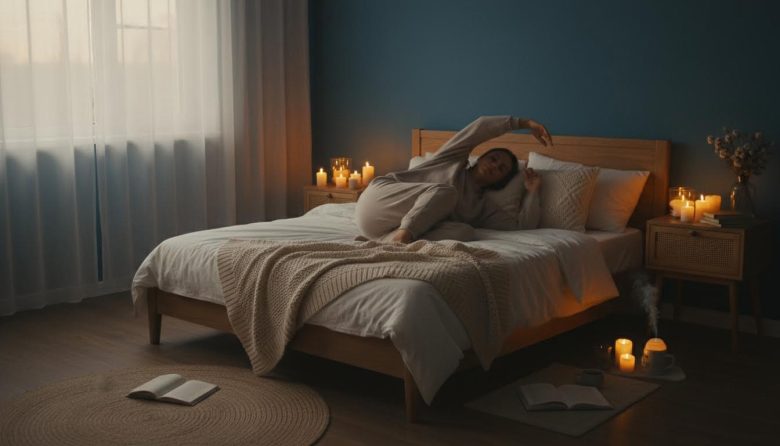
After months of tossing and turning, I finally broke the cycle by swapping late-night screen time for a simple wind-down routine. Mornings felt foggy, energy dipped mid-afternoon, and even small stressors lingered longer than they should. That changed when I leaned into my body’s natural cues—like the circadian rhythm that regulates sleep-wake cycles through light and hormone signals such as melatonin.
Sleep isn’t just rest; it resets the stress response, helping cortisol levels drop for better mood and focus the next day. Poor sleep often disrupts this balance, leaving us wired at night. In this guide, I’ll share relaxing bedtime steps I’ve tested in my own evenings, from dimming lights to gentle movement.
We’ll cover why evening light matters, building a wind-down ritual, a full 5-step bedtime flow, smart eating choices, bedroom tweaks, and light movement to release tension. These build on each other for smoother sleep onset. Try one or two this week, track your fall-asleep time and morning energy, and adjust what fits your life.
Why Evening Light Exposure Shapes Your Sleep Rhythm
Bright lights in the evening, especially blue light from screens, can suppress melatonin production—the hormone that signals it’s time to sleep. This tricks your circadian rhythm, the internal clock synced to day-night cycles, into thinking it’s still daytime. Over time, this shift often leads to longer time to fall asleep and lighter rest.
Dimming lights helps restore that rhythm. It allows melatonin to rise naturally, promoting faster sleep onset. Studies on light exposure show this cue can improve sleep quality without much effort.
What to try:
- Lower overhead lights two hours before bed; opt for lamps or candles instead.
- Switch to red or warm bulbs—they emit less blue light and feel cozy.
- Use screen filters or blue-light glasses if you must check email.
- Step outside for evening dusk light, which naturally tapers brightness.
In my routine, ditching bright kitchen lights after dinner led to deeper sleep within a week. I woke feeling more refreshed, with steadier energy. Experiment with timing and note how your evenings feel.
Crafting a Personal Wind-Down Ritual That Sticks
A consistent wind-down signals your brain to shift from the day’s stress response to rest mode. This lowers activation in the sympathetic nervous system, the “fight or flight” part, and eases into parasympathetic calm. Rituals create a buffer, often cutting mental chatter at bedtime.
Keep it simple and enjoyable so it lasts. Tie it to existing habits, like post-dinner cleanup, for better adherence. Over weeks, this can shorten sleep latency—the time from lights out to asleep.
What to try:
- Spend 10 minutes journaling three things that went well that day.
- Read a physical book for 20 minutes; avoid thrillers that rev the mind.
- Sip caffeine-free herbal tea like chamomile, which may mildly sedate.
- Practice a short body scan: tense and release muscles from toes to head.
My 20-minute ritual—tea plus reading—halved my bedtime scrolling. Nights feel more settled now. Start small, track mood before bed, and tweak for your preferences. For deeper calm, consider how to try basic mindfulness in daily moments, weaving breath awareness into these steps.
Your Relaxing Bedtime Routine
These five sequential steps form a complete flow I use around 9-10 PM. Each builds relaxation, addressing light, mind, body, and space. Follow them in order for best results; total time is about 45 minutes.
- Lights low at 9 PM. Dim all rooms and avoid screens. Why: Cues melatonin rise. Tip: Use a timer lamp. Track: Note if you feel drowsy sooner.
- Screen curfew—no devices after step 1. Charge phones elsewhere. Why: Blocks blue light interference. Tip: Read paper instead. I sleep faster without this distraction.
- Gentle stretch for 5-10 minutes. Try child’s pose or legs-up-the-wall. Why: Releases held tension without energizing. Tip: Follow breath. Track next-day soreness.
- Gratitude journal. List three specifics. Why: Shifts focus from worries, calming the stress response. Tip: Keep a bedside notebook. My entries often lead to quicker calm.
- Cool room settle. Set thermostat to 65-68°F, slip under covers. Why: Body temp drops signal sleep. Tip: Blackout curtains up. Track wake-ups overnight.
This flow turned my erratic nights consistent. Adjust times to your schedule, but keep the sequence. Over a week, monitor sleep quality with a simple journal.
Easing Digestion with Smart Late-Day Eating Choices
Late heavy meals can trigger gut-brain signals that keep you alert, plus blood sugar swings disrupt sleep depth. The gut links to serotonin production, which converts to melatonin. Lighter choices often prevent reflux and nighttime wakes.
Timing matters—eat dinner 3+ hours before bed. This gives digestion time to settle. Hydration supports this but avoid excess close to bed.
What to try:
- Light snacks like banana with almond butter if hungry.
- No caffeine after 2 PM; it lingers 8+ hours.
- Hydrate steadily through the day, taper evenings.
Safety note: If you have reflux or digestive issues, consult a doctor before changes. In my case, swapping evening wine for chamomile tea smoothed digestion and sleep. For more, explore how to choose foods that promote easy digestion to refine your plate.
Bedroom Tweaks for a Sleep-Friendly Sanctuary
Your bedroom’s sensory setup influences rest cues. Cool, dark, quiet spaces mimic natural sleep conditions, quieting the arousal system. Clutter can subtly stress the mind.
Small changes compound. Focus on temp, light, sound, and order. These tweaks often improve sleep efficiency—more time asleep versus in bed.
What to try:
- Cool to 65°F; use breathable sheets.
- Blackout curtains or eye mask for total dark.
- White noise machine or fan for steady sound.
- Declutter surfaces; reserve bed for sleep only.
Safety/caution: Check fabrics for allergies. Blackout curtains were my game-changer—mornings brighter, nights deeper. Test one tweak weekly, note morning refreshment.
Layering in Gentle Movement to Release the Day
Light movement before bed lowers cortisol without spiking adrenaline. It releases physical tension stored from the day, aiding muscle relaxation for sleep. Gentle types promote parasympathetic shift.
What to try:
- 5-minute yoga: forward folds, cat-cow.
- Evening walk if earlier, or seated marches.
- 4-7-8 breathing: inhale 4, hold 7, exhale 8.
In my routine, this caps the day nicely. Track energy the next morning. Pair with how to fit fun movement into busy schedules for daytime balance that supports evenings.
Frequently Asked Questions
How soon before bed should I dim the lights?
Often 1-2 hours helps cue melatonin production effectively. Everyone’s sensitivity varies, so start at your usual dinner time and adjust. Track sleep onset and morning alertness over a few nights to find your sweet spot.
Can I still have a glass of wine in my routine?
Wine may fragment sleep for many by altering REM cycles, even if it initially relaxes. Some tolerate small amounts earlier; others notice more wake-ups. Try herbal alternatives like valerian tea and log interruptions to compare.
What if I can’t stick to a fixed bedtime?
Consistency tends to strengthen circadian cues, but shift work or family demands happen. Aim for similar total sleep hours across days, prioritizing wind-down even on late nights. Use weekend catch-up sparingly to avoid Monday grogginess.
Is stretching before bed energizing?
Gentle, slow stretches can relax muscles and mind, but vigorous ones might rev heart rate for some. Stick to restorative poses like supine twists. If you feel more awake, shift to earlier or shorten; observe your post-stretch calm.
How do I know if it’s working?
Watch simple signals: time to fall asleep, night wakes, morning energy, and daytime mood. Apps or journals help without overcomplicating. Give changes 1-2 weeks, tweaking one at a time for clear effects.
These steps transformed my evenings from restless to restorative. Pick a couple to trial this week—track basics like energy and sleep ease. Small consistencies add up to nights you’ll look forward to.