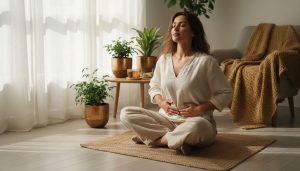
In my own high-stress weeks as a content strategist, I’ve turned to everyday home items for quick calm. Things like blankets and towels cut tension without leaving the house. These science-informed approaches draw on mechanisms like deep pressure for the nervous system and warmth for muscle release.
Relaxation becomes accessible for busy days when you use what’s already around. I’ve tested these in my routine, noticing lighter evenings after just a few minutes. They fit into real life, often easing the transition to restful sleep.
For instance, during a deadline crunch last month, wrapping in a blanket shifted my mood noticeably. Pairing such tactics with a balanced morning routine for deep daily relaxation keeps calm steady from dawn to dusk. Let’s explore doable ways to unwind right where you are.
Unfurl Stress with a Blanket Cocoon
Why it helps
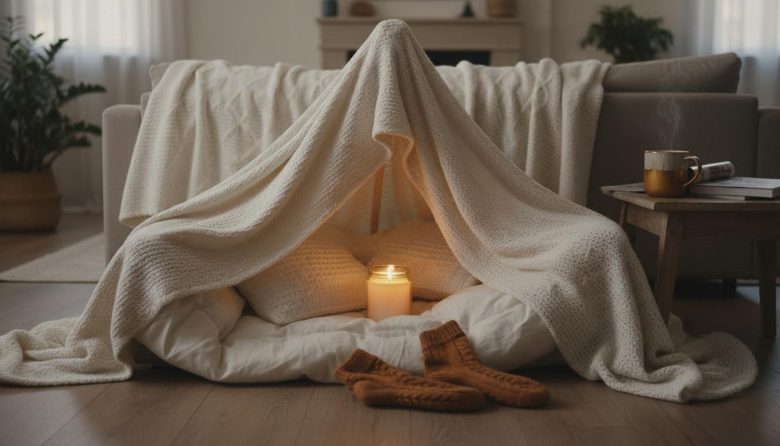
Deep pressure from weighted fabrics can quiet the stress response. It works similarly to hugging, which activates calming oxytocin pathways in the brain. This gentle compression often signals safety to your nervous system, helping to dial down overactive fight-or-flight signals.
What to try
- Layer two or three blankets over your lap or shoulders for 10 minutes while seated in your favorite chair.
- Roll yourself gently in a blanket like a burrito for a full-body hug sensation—lie down if it feels right.
- Add pillows underneath for targeted spots like the neck or lower back.
- Try it during a TV break, focusing on your breath slowing naturally.
- For extra effect, dim the lights and play soft sounds from your phone.
Safety / when to be cautious
Avoid if you’re claustrophobic; start with lighter layers to test comfort. It’s generally gentle, but ease off if it feels restrictive.
I’ve made this a staple after long workdays. One evening, after emails piled up, 15 minutes in my blanket setup dropped my tension from an 8 to a 4 on my mental scale. Simple shifts like this build reliability over time.
Breathe Easy Against Cushion Support
Why it helps
Propped breathing enhances diaphragm expansion. This often slows heart rate through vagus nerve stimulation, a key player in the parasympathetic rest response. Supporting your posture frees energy for deeper inhales, which can help regulate stress hormones like cortisol.
What to try
- Stack two cushions behind your back in a chair for upright belly breaths using the 4-7-8 pattern—in for 4, hold 7, out 8.
- Lie on the floor with a pillow under your knees to ease lower back tension during long exhales.
- Hug a firm cushion to your chest for resistance inhales, feeling the expansion against it.
- Practice for 5 minutes before bed to prime sleep.
- Combine with gentle arm raises on inhales for a fuller stretch.
During a family gathering last year, when noise amped my anxiety, cushion breaths kept me grounded. They turn scattered energy into focus, often within minutes.
Transitioning from seated work to this setup feels seamless. It pairs well with evening wind-downs, setting a relaxed tone.
Routine Options Comparison Table: Home Items for On-Demand Calm
| Home Item | Core Technique | Why It Tends to Help | Time to Try |
|---|---|---|---|
| Blanket | Cocoon wrap or lap weight | Deep pressure calms nervous system via oxytocin | 10-15 min |
| Cushion or Pillow | Propped breathing support | Enhances vagus nerve for slower heart rate | 5-10 min |
| Towel | Warm compress or stretch aid | Warmth dilates vessels; pulls release muscles | 5-10 min |
| Kitchen Spices | Aroma simmer or rub | Olfactory shift to brain’s calm centers | 3-5 min |
| Tea Staples | Warm infusion ritual | Supports circadian wind-down with hydration | 10-15 min |
This table lets you scan options quickly for whatever your home offers. I glance at mine during busy evenings to pick based on time or need. It keeps choices practical without overwhelm.
Melt Knots with a DIY Towel Compress
Why it helps
Moist heat from a towel penetrates deeper into tissues than dry warmth. It promotes blood flow, which can ease guarded muscles and reduce soreness buildup. This approach often loosens areas tightened by desk posture or daily carry.
What to try
- Dampen a hand towel, microwave for 30-45 seconds, then fold and apply to neck or shoulders.
- Combine with slow neck rolls—circle gently five times each way.
- Refresh every few minutes as it cools, stacking for more weight if desired.
- Use on calves after standing days, propping feet up.
- Breathe deeply into the warmth, exhaling tension mentally.
Safety / when to be cautious
Always test heat on your wrist first to avoid burns. Skip on fresh injuries or inflamed skin; opt for cool instead if heat-sensitive.
Last winter, shoulder knots from shoveling melted away with this after 10 minutes. It’s a go-to that I’ve refined over colder months, now part of my weekly reset.
Building on breathing support, heat adds a layer of release. Your body responds well to these combined cues for deeper calm.
Spice Up Serenity with Kitchen Aromas
Why it helps
Scents like citrus or cinnamon engage olfactory pathways straight to the brain’s emotional centers. They can shift mood by mimicking calming essential oils, often reducing perceived stress. This sensory input distracts from worries while grounding you in the present.
What to try
- Simmer lemon peels, orange rinds, or cinnamon sticks in a pot of water on the stove for 10 minutes.
- Crush dried herbs like mint or rosemary in a bowl and place near your reading spot.
- Rub hands with olive oil and a pinch of spice, then cup over nose for deep inhales.
- Pair with closed eyes for 3 minutes, letting scent fill your awareness.
- Diffuse by wiping cabinet doors with citrus-soaked cloth.
I started this during pandemic lockdowns when fresh air was limited. A quick lemon simmer lifted fog from afternoon slumps reliably. It’s low-effort with uplifting payoff.
These aromas bridge to evening rituals smoothly. They prepare the mind for quieter activities ahead.
Herbal Tea Ritual for Evening Ease
Why it helps
Caffeine-free infusions like chamomile or ginger support the body’s circadian wind-down. The warmth signals rest, while hydration counters dehydration-stressed tension. Sipping mindfully fosters a pause that often eases racing thoughts.
What to try
- Brew chamomile, peppermint, or fresh ginger slices from pantry staples in hot water for 5 minutes.
- Sip slowly in dim light, noting your breath with each swallow for presence.
- Follow with journaling one grateful note to anchor positivity.
- Add a honey drizzle if needed, stirring mindfully.
- Hold the mug for extra hand warmth during sips.
One hectic project end found me brewing ginger tea nightly. Sleep came easier, mood steadier by week’s end. For bedtime enhancement, layer in how to choose relaxing bedtime reads for better sleep.
This ritual caps the sequence perfectly. It turns home items into a full unwind flow.
Experiment with one tip each evening, tracking your mood or tension on a simple 1-10 scale. Notice patterns in energy, sleep quality, or ease—small tweaks like these built lasting calm in my own routine. Adjust based on what signals back to you, perhaps weaving in a beginner’s guide to mindful eating habits for daytime support.
Over weeks, these become habits that fit effortlessly. Your home turns into a calm toolkit, ready anytime.
Frequently Asked Questions
1. How often should I use these home relaxation tips?
Daily short sessions, like 5-10 minutes, often build cumulative benefits for stress management. However, listen to your body’s energy levels—some days call for more, others less. Variation keeps it sustainable and prevents routine fatigue.
2. Can these replace professional therapy?
These are supportive, everyday tools that complement self-care but aren’t substitutes for professional help. They work well alongside therapy for mild tension. Consult a pro for persistent stress, anxiety, or related concerns.
3. What if I don’t have exact items like chamomile?
Swap freely with any pantry-friendly options—warm water with lemon, plain herbal mixes, or even hot milk suit the ritual. The key is the mindful sipping and warmth, not perfection. Focus there for similar effects.
4. Are these safe for everyone?
Generally yes for most adults, following the brief caution notes provided. Adapt for conditions like pregnancy, skin sensitivities, or mobility limits by lightening intensity. When in doubt, check with a healthcare provider for personalization.
5. How do I know if it’s working?
Track simple signals such as easier sleep onset, lighter mood post-session, or reduced muscle tightness. Results vary by individual factors like baseline stress or consistency. Give it 1-2 weeks of regular use to gauge personal shifts.