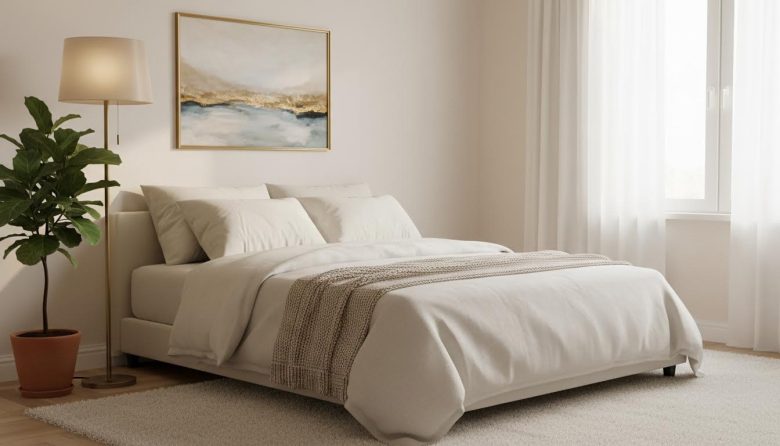
For years, my sleep felt erratic. I’d toss through the night, waking up drained despite hitting the pillow early. Over six months, I tested simple bedroom tweaks, like blackout shades and breathable sheets, and noticed steadier energy by morning.
Our environments send constant signals to the body. Sensory inputs, such as light and clutter, often influence the stress response and melatonin production, key for restful cycles. Dimming cues can help align your circadian rhythm, while calm textures may ease tension.
In this guide, I’ll share doable changes from my routine. We’ll cover lighting, bedding, declutter, aromas, sounds, and flow. Experiment with one or two, then track your sleep quality or next-day mood to see what sticks.
Bedroom Setup Do’s and Don’ts at a Glance
| Calming Do | Why It Helps | Disruptive Don’t | Why It Disrupts |
|---|---|---|---|
| Blackout curtains | Cues circadian rhythm for melatonin release | Bright overhead lights | Suppresses sleep hormones |
| Breathable cotton sheets | Maintains even body temp for deeper rest | Synthetic heavy fabrics | Traps heat, prompts wake-ups |
| Minimal surface clutter | Reduces visual mental load | Piles of clothes or papers | Triggers subconscious stress |
| Soft white noise machine | Masks irregular sounds for steady cycles | Tickling clocks or traffic | Interrupts light sleep stages |
| Gentle lavender diffuser | May calm via scent pathways to brain | Harsh cleaners or perfumes | Irritates airways, heightens alertness |
| Open floor paths | Allows easy movement, lowers tension | Crowded furniture layout | Creates subconscious obstacles |
This quick table pulls from setups I’ve tested. It highlights contrasts that often make a difference. Use it as a checklist when scanning your space.
Sync Room Lighting to Your Natural Body Clock
Why It Helps
Light directly affects the circadian rhythm, the body’s internal clock. Exposure to dim, warm tones in the evening tends to lower cortisol and boost melatonin, preparing you for rest. In my trial, switching to sunset-like lighting two hours before bed improved my fall-asleep time by about 15 minutes.
Bright blue light from screens or bulbs can mimic daytime, delaying sleep onset. Soft adjustments often lead to more consistent rest cycles. You’ll likely notice steadier mornings after a week.
What to Try
- Install dimmable warm bulbs around 2700K; I tested these and found they aid wind-down without flipping switches.
- Add blackout shades or curtains; tape gaps if needed for full darkness during sleep hours.
- Opt for red-toned nightlights for midnight bathroom trips, keeping blue light minimal.
- Set phone to night mode automatically after 8 PM, a free tweak that synced with my evenings.
- Place lamps at eye level for reading, avoiding harsh overhead glare.
- Try Himalayan salt lamps for a subtle glow; they add warmth without overstimulation.
Start with one lighting swap this week. Note how your energy shifts by afternoon.
Layer Bedding Choices for Temperature Balance
Why It Helps
The body naturally drops temperature to signal sleep onset. Breathable materials help maintain this drop, preventing night sweats or chills that fragment rest. When I swapped heavy blankets for layered cotton, my wake-ups dropped noticeably over two weeks.
Synthetics can trap moisture, spiking core temp and alertness. Natural fibers often promote even comfort through the night. This tweak supports deeper sleep stages without much effort.
What to Try
- Choose moisture-wicking sheets like bamboo or percale cotton; wash weekly for freshness.
- Layer with a light duvet and throw blanket, easy to adjust mid-night.
- Use a cooling pillow topper if you run hot; I added one and slept through hotter nights.
- Opt for wool or linen for breathability in varying seasons.
- Avoid tight tucking; loose sheets allow air flow.
Safety / When to Be Cautious
Check for fabric allergies before full swaps. Layer lightly if you overheat easily, and consult a doctor for persistent temperature issues.
These choices build a routine that feels supportive. Track if mornings feel less groggy.
Declutter Surfaces to Quiet Your Mind
Why It Helps
Visual clutter can subtly activate the stress response, keeping the mind scanning for disorder. Clear surfaces often reduce this load, fostering mental calm. In my bedroom refresh, boxing stray items led to faster relaxation at bedtime.
A tidy space signals safety to the brain, easing into rest. It pairs naturally with habits like how to build a simple daily relaxation habit, amplifying evening ease.
What to Try
- Apply the one-nightstand rule: only lamp, book, and water glass allowed.
- Use under-bed bins for seasonal clothes; keeps floors clear effortlessly.
- Install wall hooks for daily outfits, preventing chair piles.
- Spend 5 minutes nightly resetting surfaces; it became my quick wind-down step.
- Donate unused items monthly to maintain minimalism.
- Add a small tray for essentials, containing small chaos.
Decluttering transforms the room’s energy. You’ll sense it when entering at night.
Infuse Gentle Aromas for Subtle Sensory Ease
Why It Helps
Scents travel via olfactory nerves to brain areas that regulate mood and stress. Lavender, for instance, may lower heart rate and promote calm. My diffuser experiment for 30 days showed easier drift-off, especially on busy nights.
Overpowering smells can backfire, but subtle ones often enhance the bedroom’s restful vibe. They work alongside tweaks like those in my weekly evening routine to melt away stress.
What to Try
- Diffuse diluted lavender or chamomile 30 minutes pre-bed; start low.
- Spritz pillow with a linen spray of citrus or vanilla for freshness.
- Place dried lavender sachets in drawers for passive scent.
- Use beeswax candles briefly for cedarwood notes, then extinguish.
Safety / When to Be Cautious
Use scents sparingly if sensitive; ventilate well. Test patches for reactions, and skip around pets or kids.
Muffle Sounds Without Total Silence
Why It Helps
Absolute quiet isn’t always ideal; low, consistent noise can mask disruptions and support sleep cycles. White noise mimics womb-like steadiness for the brain. I added a fan after noisy neighbors, cutting wake-ups in half.
Irregular sounds jolt the stress response mid-rest. Gentle muffling often steadies deeper sleep phases.
What to Try
- Run a fan or app with rain sounds on low volume.
- Lay thick rugs to dampen footsteps and echoes.
- Try soft earplugs molded to fit comfortably.
- Seal window gaps with weatherstripping for street noise.
- Use a sound machine with ocean waves; cycle through options.
Arrange Furniture for Effortless Bedroom Flow
Why It Helps
Open paths reduce subconscious tension from navigating obstacles. Smooth flow promotes relaxation upon entry. Rearranging my bed against a wall opened space, making the room feel larger and calmer.
Crowded layouts can heighten alertness. Intentional placement supports a sanctuary feel.
What to Try
- Position bed for clear path from door to bathroom.
- Limit to essentials: bed, nightstands, one chair.
- Angle dresser to avoid blocking light sources.
- Create a 3-foot walkway radius around the bed.
- Float furniture slightly off walls for airiness; test in your space.
This layout tweak elevates daily use. It complements broader wellness like a 30-day gentle movement plan for beginners.
Start Small and Track Your Rest
Pick one change, like lighting or declutter, and implement for a week. Journal simple signals: fall-asleep time, wake-ups, morning mood. Adjust based on what boosts your energy.
Expect variation; bodies adapt differently. Combine with consistent bedtimes for best results. Over time, these build a rest-supporting haven.
Your bedroom sets the stage for recovery. Small, tested shifts often yield steady gains. Give it a go and refine as needed.
Frequently Asked Questions
How soon can I expect better rest from these changes?
Many notice shifts in 1-2 weeks, but it varies with overall habits and consistency. Track sleep duration and next-day energy to gauge progress. Pair with steady routines for quicker adaptation.
What’s the best budget for a calming setup?
Start free with decluttering and light blocking using towels. Allocate $50-200 for sheets, bulbs, and a diffuser. Prioritize high-impact items like bedding over decor.
Can this help if I have insomnia?
These tweaks may support better sleep hygiene alongside professional care. They address environment but not underlying causes. Consult a doctor for tailored advice.
Are essential oils safe for everyone?
Often yes when diluted and used briefly, but test for skin or breathing reactions. Avoid if pregnant, epileptic, or around young children without guidance. Ventilation prevents buildup.
How do I maintain the calm long-term?
Set a weekly 15-minute reset: dust, declutter, refresh scents. Adapt as seasons or life change bedding. Consistency keeps the space restorative.