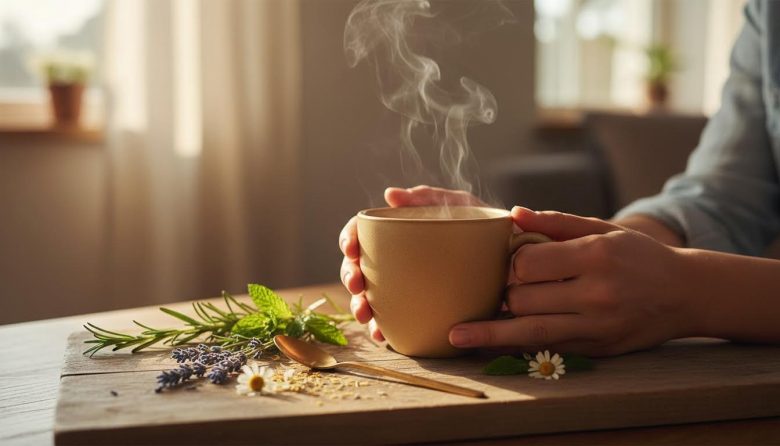
Picture this: After a full day, I sink into my favorite chair, steam rising from a mug of chamomile. That first sip signals my body it’s time to downshift. Herbal teas have become my reliable anchor for evenings. Their plant compounds often support the body’s natural relaxation cues.
In this guide, we’ll explore science-informed ways to make herbal tea sipping a gentle ritual for better unwind. These are realistic steps tested in my own routine. You’ll find tips for your evenings that fit busy lives. Aim for 20-30 minutes of calm before bed, and track your mood shifts to see what clicks for you.
Why Herbal Teas Nudge Your Body Toward Evening Calm
Herbal teas often contain plant compounds like apigenin in chamomile. These may interact with your stress response. They can encourage GABA activity, which supports milder relaxation in many people.
Unlike caffeinated drinks, herbal teas hydrate without a jolt. This aligns well with your circadian rhythm’s natural evening dip. Warm sipping in low light tends to enhance that calming effect.
Research on popular herbs suggests they may help lower cortisol trends for some. In my logs, evenings with tea show steadier wind-downs. I notice quicker settling into rest after consistent use.
The warmth itself plays a role too. It can soothe digestion and signal safety to your nervous system. Over time, this builds a cue for calm that your body anticipates.
Key Herbal Teas That Fit Evening Rhythms
A comparison table can clarify herbal tea options by benefits and prep. This makes selection quick and practical for everyday readers like you.
| Tea Variety | Calming Mechanism | Flavor Profile | Steep Time | Personal Routine Note |
|---|---|---|---|---|
| Chamomile | May boost GABA for relaxation | Mild, apple-like | 5 minutes | My go-to after work; eases tension reliably |
| Lavender | Tends to reduce anxiety signals | Floral, soothing | 4-6 minutes | Blends well; helps when days feel scattered |
| Peppermint | Supports digestion, clears mental fog | Cool, minty | 3-5 minutes | Light evenings; prevents post-dinner bloat |
| Lemon Balm | Often calms nerves, aids mood balance | Citrusy, bright | 5-7 minutes | Curbs late scrolling in my routine |
| Valerian Blend | May promote deeper rest onset | Earthy, woody | 7-10 minutes | Use sparingly; strong for tougher nights |
| Passionflower | Can ease worry, support sleep cues | Mild, grassy | 5-8 minutes | Rotates in weekly; steady calm builder |
This table draws from my trials and common evidence. Pick one or two to start. Rotate to keep interest high.
Simple Ways to Brew and Sip for Deeper Relaxation
Start with loose leaf or bags in hot water, around 190°F—not boiling—to preserve compounds. This keeps flavors gentle and benefits intact. I prep my kettle early to avoid rush.
Here are five actionable ideas to try:
- Set a 8 PM brew alarm on your phone. This cues your evening shift consistently.
- Dim lights during the steep. Soft glow enhances relaxation signals.
- Pair with the Beginner’s Guide to Gentle Breathing Practices. A few 4-7-8 breaths amplify the unwind.
- Experiment with add-ins like a slice of fresh ginger or honey. Keeps it varied without overpowering.
- Sip mindfully: Note one grateful moment per sip. This shifts focus lightly.
These steps keep things light and realistic. I rotate them weekly to stay engaged. Track how each affects your energy dip.
Building a Doable Evening Tea Ritual That Sticks
Start small with a prep station by 7 PM. Gather mug, tea, and strainer in one spot. This removes friction for busy nights.
A simple flow works well: Tidy your space for two minutes, then brew for five. Sip mindfully for 10 minutes, followed by light stretches. I add a gentle flow from the Beginner’s Guide to Gentle Daily Yoga Flows here sometimes.
My routine evolved from rushed mugs to this 20-minute buffer. It boosted my sleep onset noticeably. Calmer entries to bed became the norm after two weeks.
Track simple signals weekly: mood before and after, sleep quality. Adjust based on what resonates. Small tweaks make it sustainable long-term.
Link it to your bedtime cues too. Follow with steps from a Bedtime Plan for Better Rest and Recovery. This layers habits without overwhelm.
Lessons from My Month of Consistent Tea Sips
In week one, chamomile steadied my post-work buzz. I felt the edge soften within days. No big changes, just reliable calm.
By week three, lemon balm curbed my late scrolling habit. Pairing it with dim lights made evenings feel shorter in a good way. Peppermint helped on fuller dinner nights.
Pitfalls I hit? Over-steeping led to bitterness. Tweak: Set timers for shorter brews. Variety prevented boredom too.
Overall, mood logs showed steadier evenings. Sleep came easier, though not overnight. Readers, log your pre- and post-sip mood for personal wins. Small changes compound over time.
One anecdote: A stressful project month, valerian blend stepped in twice weekly. It nudged deeper rest without grogginess. Listen to your body’s feedback.
Cautions and Tweaks for Safe, Gentle Sipping
Most herbal teas carry low risk for healthy adults. Still, check for allergies, like ragweed family sensitivity with chamomile. Start with one cup to test.
If pregnant, skip blends like raspberry leaf or high valerian. They may interact mildly. On medications such as blood thinners? Consult your doctor first.
Space tea from dinner by 30 minutes to aid digestion. Hydration is a bonus, but avoid overload near bed to prevent wake-ups. Dilute stronger brews if needed.
These notes keep things safe and non-alarmist. I space mine thoughtfully in my routine. Adjust for your health signals.
FAQ: Your Herbal Tea Evening Questions
Can herbal teas improve sleep quality?
They may support better wind-down for some by easing tension and aligning with circadian cues. Results vary widely based on individual factors like stress levels. Track your sleep signals, such as onset time or morning energy, rather than expecting universal shifts.
How much tea is too much before bed?
One to two cups often suits most people without issues. More might lead to bathroom trips disrupting rest. Time it 60-90 minutes before bed and experiment with your personal rhythm for best results.
Are all herbal teas caffeine-free?
Most true herbals like chamomile or peppermint contain none. Always label-check blends, as some may include trace amounts from additives. Pure options tend to be safe choices for evenings.
What if I don’t like the taste?
Blend mild chamomile with fruitier hibiscus or add a splash of lemon. Dilute stronger ones or save chilled remnants for daytime. Variety and tweaks like these prevent dropout—my main adjustment over time.
Do they work alongside other unwind habits?
Yes, herbal teas layer well with reading, light stretches, or breathing routines. Consistent cues from multiple habits can amplify effects gently. Avoid overload by starting with two paired practices.
Experiment with one tea this week. Note your mood and sleep shifts in a simple log. Gentle, consistent tweaks build lasting evening calm in everyday life.